AI Transformation in Business: The Essential Guide to Manufacturing Automation
In an era where global supply chains are under constant pressure and competition demands unprecedented efficiency, manufacturing automation stands as a pivotal force driving business transformation. As artificial intelligence (AI) integrates deeper into production lines, companies that harness its potential are not just surviving, they're thriving, lifting productivity and cutting operational costs. Yet the number of manufacturers exploring AI vastly outstrips the number genuinely prepared to deploy it, and the gap between aspiration and execution is widening. This guide explores how AI is reshaping manufacturing automation, offering actionable insights for leaders to bridge that divide and fuel sustainable growth.
The Current State of AI Adoption in Manufacturing: Insights from 2026 Outlooks
The manufacturing landscape in 2026 is marked by a surge in AI interest, yet adoption remains uneven. Interest in AI is widespread across the sector, and the enthusiasm stems from the promise of enhanced efficiency, predictive maintenance, and smarter decision-making. The reality on the shop floor is starker: only a fraction of manufacturers have the foundations in place to actually implement it. This readiness gap is exacerbated by a perception divide between leadership and frontline teams, executives often overestimate progress, while workers on the shop floor highlight operational bottlenecks like legacy systems and data silos.
The direction of travel underscores the same momentum. The share of industrial manufacturers expecting to highly automate their key processes keeps climbing. This acceleration in manufacturing automation is widening the chasm between industry leaders, who are already reaping benefits like reduced downtime and optimized supply chains, and laggards struggling with integration hurdles. For mid-market manufacturers, the outlook signals a critical window: invest now in scalable AI infrastructure to avoid being left behind as automation becomes table stakes for competitiveness.
These insights aren't just theoretical. The most mature adopters are pushing more product through the same lines, driven by AI's ability to analyze real-time data from IoT sensors. Yet the path forward requires addressing not just technology but also cultural alignment across teams.
Key Challenges and Bottlenecks in AI Readiness
Despite the hype, implementing manufacturing automation faces significant hurdles that many organizations underestimate. The primary bottleneck is the readiness gap already described: far more manufacturers are exploring AI than have the foundational elements in place, such as robust data governance and integrated IT systems. Legacy equipment, often incompatible with modern AI tools, poses another barrier, upgrading machinery is capital-intensive and disrupts production while it happens.
Workforce skill mismatches compound these issues. Frontline teams report feeling disconnected from AI initiatives, and many have had no training at all in the digital tools they are being asked to use. This leads to resistance and errors during rollout. Supply chain volatility adds fuel to the fire; economic uncertainties like tariffs and material shortages demand agile responses that unprepared manufacturers can't deliver.
Data silos remain a persistent challenge, fragmenting insights and hindering AI's predictive capabilities. For instance, without unified data platforms, machine learning models for quality control falter, and defect rates climb rather than fall. Cybersecurity risks also loom large, AI-driven systems are prime targets for breaches, potentially halting production lines.
Addressing these requires a holistic approach: conducting readiness audits, investing in upskilling programs, and prioritizing modular AI solutions that integrate with existing setups. By tackling these bottlenecks head-on, manufacturers can transform challenges into opportunities for resilient manufacturing automation.
What Comes Next: How AI Will Reshape Manufacturing Operations
Look a few years down the road and the shape of the change is already legible. AI will fundamentally alter operations, supply chains, and workforce strategies alike. At the core is AI's role in enabling hyper-personalized production, where algorithms optimize everything from inventory to assembly lines in real time.
Supply chains are the clearest case. Predictive logistics is moving from pilot to default, with AI anticipating disruptions rather than reacting to them. This shift addresses current pain points like delays from global events, allowing for dynamic rerouting and supplier diversification. In operations, AI will absorb a growing share of routine tasks, freeing human workers for higher-value roles and boosting overall efficiency.
Workforce strategies will evolve too, with AI-driven reskilling platforms becoming standard. Skill gaps narrow as virtual simulations train employees on complex machinery. However, this comes with a caveat: ethical AI governance will be mandatory, ensuring transparency in decision-making to build trust.
Together these shifts sketch the future of manufacturing automation, and leaders who adopt them early will see returns through lower unit costs and faster time-to-market. For businesses, the message is clear: align AI strategies with these trends to stay ahead.
Addressing Workforce Gaps with Physical AI and Robotics
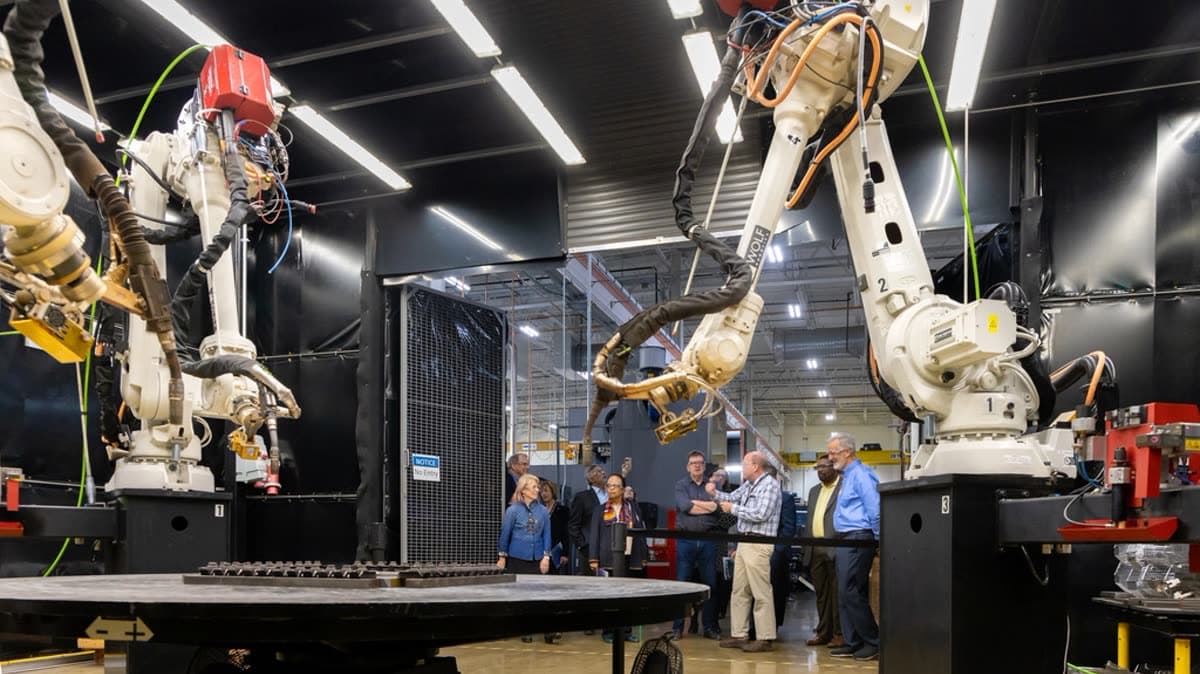
The manufacturing sector faces an acute talent crisis, particularly in skilled trades. The shortage of qualified welders in the US is already severe, and it is widening. That pressure is accelerating the adoption of physical AI, intelligent robotics that mimic human dexterity while integrating cognitive capabilities.
Physical AI isn't just about replacing workers; it's about augmenting them. Robots equipped with AI can handle repetitive, hazardous tasks like welding or assembly, allowing humans to focus on oversight and innovation. In 2026, enterprises are realizing they need tailored intelligence: not generic bots, but systems that learn from operational data to adapt seamlessly.
This adoption is driven by necessity, companies risk failure without it. Early implementations are producing real productivity lifts in labor-intensive processes. To address gaps, manufacturers should partner with AI consultancies for custom robotics deployments, starting with pilot programs in high-shortage areas. Training hybrid workforces, humans collaborating with AI, will be key to sustainable manufacturing automation.
Real-World Applications: Lessons from Leading Companies
Leading manufacturers are already demonstrating the power of AI in manufacturing automation. Industry awards and showcases now routinely spotlight firms embedding AI into core operations, and the most common entry point is predictive maintenance: catching a failure before it becomes unplanned downtime.
The pattern repeats across the large industrials. AI platforms are wired into the factory floor to optimize energy use, which cuts cost and emissions at the same time. Machine learning models watch equipment in service, flag likely failures early, and extend the working life of expensive assets rather than running them to breakdown.
These cases offer lessons: start with high-impact areas like quality control, scale via cloud-based AI, and measure success with KPIs like OEE (Overall Equipment Effectiveness). By emulating these strategies, mid-market players can realize similar gains without massive upfront investments.
Emerging Trends: Agentic AI and the Shift to Mainstream Automation
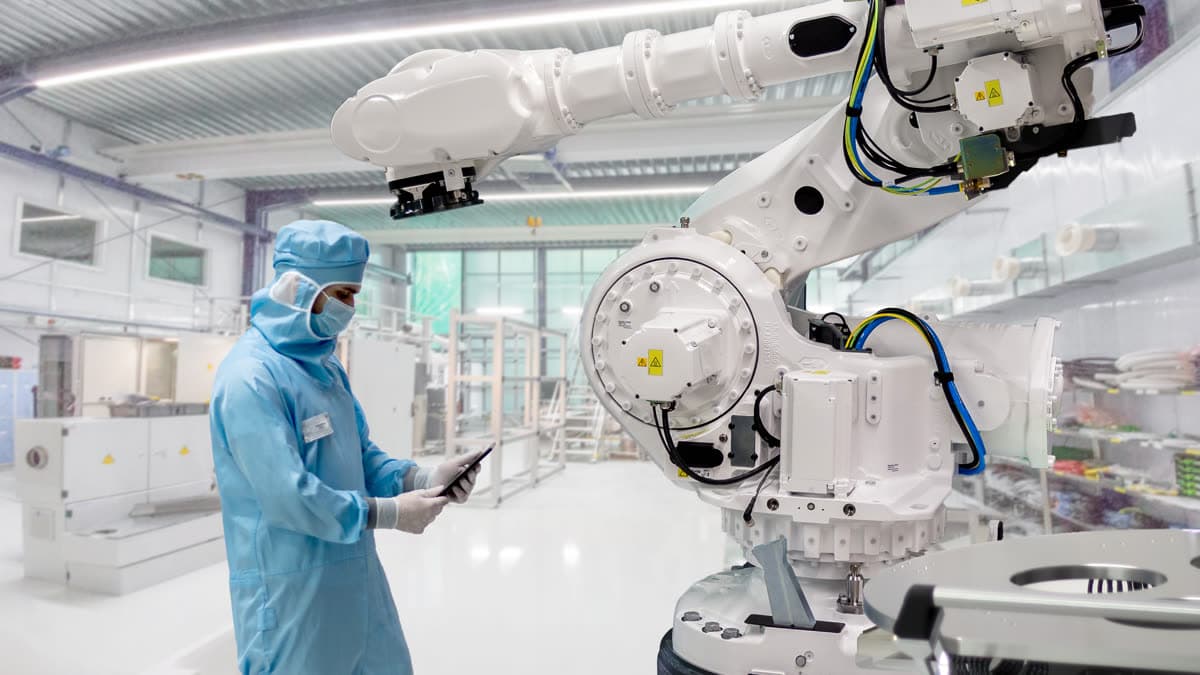
2026 marks a turning point for manufacturing automation, with physical AI transitioning from niche pilots to mainstream integration. Carmakers are piloting humanoid robots on real lines, and consolidation among the big robotics vendors signals broader accessibility. Driven by advancements in sensors and edge computing, physical AI will handle complex tasks autonomously, and adoption is on a steep curve.
Parallel to this, agentic AI is emerging as a game-changer. This autonomous technology reasons and decides without human input, ideal for navigating trade uncertainties. Manufacturers are using it to automate sourcing, scanning global markets for alternatives amid tariffs and cost hikes. Early adopters report noticeably shorter procurement cycles.
These trends, agentic AI for strategic decisions and physical AI for execution, herald a shift to fully autonomous enterprises. AI orchestration platforms exemplify this, blending agents with workflows for scalable reliability. For manufacturers, monitoring these evolutions ensures competitive edge in an AI-first world.
Practical Strategies for Mid-Market Manufacturers to Implement AI
Mid-market manufacturers, often resource-constrained, can still embark on AI transformation with pragmatic steps. First, assess readiness: use a structured framework to benchmark yourself honestly against the small cohort that is genuinely prepared, focusing on data quality and team alignment.
Prioritize low-hanging fruit: implement AI for predictive maintenance using off-the-shelf tools, which buys you a quick win on unplanned downtime. Invest in modular robotics for workforce gaps, starting small to build internal expertise.
Foster cross-functional teams: bridge leadership-frontline divides through training programs, aiming for genuine digital literacy across the floor rather than a completed course list. Partner with consultancies for customized roadmaps, and build ethical AI governance in from the start rather than bolting it on later.
Budget wisely: ring-fence a defined slice of capex for AI pilots and track return using metrics you already trust, like cost per unit. Scale successful initiatives enterprise-wide, working steadily toward highly automated key processes. These strategies make manufacturing automation accessible and impactful.
Conclusion: Building a Sustainable Path to AI Transformation
AI transformation in manufacturing isn't a distant horizon, it's happening now, with manufacturing automation poised to redefine efficiency, resilience, and growth. By closing readiness gaps, embracing physical and agentic AI, and learning from leaders, businesses can navigate the challenges and seize the opportunities that will define the rest of this decade.
The key takeaway? Start with a thorough AI assessment to identify your unique path forward. At Smarter Revolution, our free AI readiness assessment helps manufacturers pinpoint bottlenecks and map a practical route to automation, and we build and run the AI inside your existing operations rather than handing you a strategy deck. Contact us today to unlock your potential and join the ranks of AI-powered leaders.
Smarter Revolution Team
We help mid-market companies use AI to capture expertise, accelerate training, and build teams that work smarter. No hype, just practical AI that makes a real difference.
Ready to bring AI to your team?
Find out where AI can make the biggest impact on your operation. Our free assessment takes 5 minutes and gives you a practical roadmap.